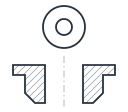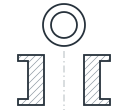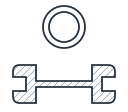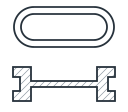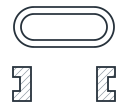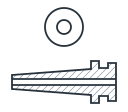
Custom rubber bushings provide a specified interface between components, often to accommodate movement or manage vibration. Their stiffness and mounting arrangement can affect the behavior of the equipment.
Provide a drawing or existing sample with dimensions, load direction, movement range and service conditions. Specify any sleeves, bonding requirements and dimensional tolerances. The rubber compound must suit the temperature and fluid exposure.
Manufacturing review, tooling and sampling help establish whether the part can meet the agreed requirements. Verify load, movement and vibration behavior in the intended assembly rather than assuming a bushing has no effect on surrounding components.
Describe the loaded assembly
Provide the mating-part dimensions, load directions and permitted movement. Identify any sleeves, inserts or bonded interfaces. State how the sample will be held during evaluation so the agreed check represents the intended assembly.
Record sample acceptance
Agree on the dimensions and checks needed before approving production, including any specified movement or vibration behavior. Record the sample configuration and relevant test conditions. A dimensional match alone does not establish that a bushing will behave as required under load.