
Extended sleeve profiles
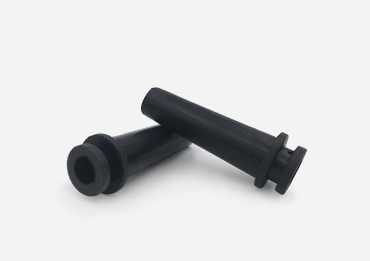
Long-Neck Rubber Grommets
Choose a long-neck rubber grommet when the assembly calls for a sleeve extending beyond the panel mounting section. Compare the LNG profiles against the cable passage, panel fit, sleeve geometry and available installation space. Confirm the exact drawing before selecting a part.
Product catalog & online ordering
Choose a Product Series to Order
Open a product series, match the drawing and part dimensions, then select the available material and color. Review the price and minimum order, add the part to your cart, and adjust the quantity before checkout.
- 1. Match the sizeCheck the profile and complete dimensions.
- 2. Configure your orderSelect material and color; review price and MOQ.
- 3. Add to cartAdjust quantities, review your items and continue to checkout.
Compare the sleeve as well as the panel fit
The extended neck is the defining feature of this family. It needs its own space and dimensional checks.
Sleeve projection and overall length
Identify how far the sleeve must extend from the panel in your assembly drawing. Confirm that dimension against the profile drawing rather than treating overall thickness as the free sleeve length.
Passage and mounting section
Check inside diameter against the cable or required passage, then compare groove diameter and groove width with the panel opening and thickness. The outside diameter also needs clearance around the mounting position.
Orientation and nearby components
Show which side of the panel carries the neck and the space around its full length. Include nearby connectors, fasteners and the intended cable route so the selected sleeve can be checked in its installed position.
Identify the correct LNG drawing and table section
The source catalog contains more than one long-neck drawing and repeated dimension headers. Keep each part with its corresponding section.
Retain the complete part reference
Use the LNG part number and the drawing associated with its source table section. Compare all dimension columns and their units before considering another profile with a similar passage diameter.
Read limits as limits
Some source entries use a less-than sign instead of a single groove-width value. Retain that notation and request confirmation of the intended panel fit; do not convert it into an exact nominal thickness.
Confirm the sleeve construction
The word sleeve can refer to different rubber shapes. Send a section drawing or existing sample if your requested construction differs from the illustrated LNG profiles, so manufacturability can be reviewed without assuming a catalog match.
Specify operating conditions and production requirements
The sleeve geometry identifies the part family; the application determines what else must be confirmed.
Material and cable movement
Provide temperature, contact fluids, outdoor exposure and expected cable movement, along with hardness and color requirements. Confirm the compound and sample configuration against the intended service conditions.
Separate performance requirements
A long neck does not automatically establish certified strain relief, pull-out retention or sealing performance. State any such requirement and its acceptance method separately from the dimensional specification.
Quotation for the required configuration
Send the selected LNG part number or your drawing, quantity and delivery requirements. A custom sleeve made from your drawing or sample requires manufacturability review, quotation, tooling and sampling before production.
Before you specify a part
Long-Neck Rubber Grommets: purchasing questions
Confirm the complete part specification and acceptance requirements for your assembly.
How is a long-neck grommet different from a standard panel grommet?
A long-neck profile includes a sleeve extending from its panel mounting section. In addition to passage and panel dimensions, selection requires sleeve geometry, orientation and clearance checks.
Is overall thickness the same as the exposed neck length?
Do not assume those measurements are identical. Use the corresponding section drawing to identify overall thickness and sleeve projection, and specify the projection needed in the assembled position.
How should I read a groove-width entry marked with a less-than sign?
Keep the notation with the part reference and ask for confirmation of its meaning for your panel. It is a limit entry, not a single exact groove-width value to substitute into a drawing.
Does the extended sleeve guarantee strain relief or a cable seal?
No such performance should be inferred from the neck length. Provide the cable, panel and acceptance conditions for any retention, movement or sealing requirement so the assembly can be reviewed.
Can you manufacture a different sleeve length or section?
Send your drawing or existing sample with the required section, tolerances, material and quantity. We review manufacturability and the quotation, tooling and sampling requirements before agreeing custom production.
Prepare your production inquiry
Send the part reference or your drawing or existing sample details, required quantity and service conditions. Confirm manufacturing feasibility, sample arrangements and production requirements for your specification.