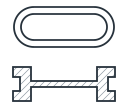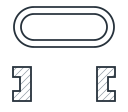
Silicone grommets provide an interface where a cable, tube or other component passes through an opening. Selecting silicone starts with the installation and service requirements, rather than assuming that one material is suitable for every application.
Match the profile and installation
Compare the cable or tube diameter, panel cutout, panel thickness and space around the flange. Check whether the component must pass over a connector during assembly. The bore, groove and overall profile must work together; a matching bore alone does not establish the fit.
Use the silicone grommet size tables to compare available profiles and configurations. Material and color options vary by part. Check the available configuration, price and minimum order quantity before ordering.
Specify the compound and appearance
Confirm hardness, continuous and peak temperatures, exposure duration, contact fluids and any required sealing or electrical performance. Silicone does not automatically establish food-contact suitability, electrical insulation or a seal. Those requirements must be assessed for the selected compound and finished assembly.
Color and transparency are appearance requirements to confirm for the proposed compound. Do not infer material performance from a clear appearance or a color name. The rubber material selector provides a starting point for comparing material families.
Confirm the part before production
Where a standard profile does not fit, provide a drawing or existing sample for manufacturability review and quotation. Agree on the part specification and acceptance criteria, then check the sample in the intended assembly before approving production.