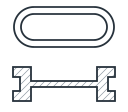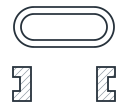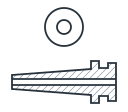
Closed rubber grommets, often called blind or blanking grommets, cover unused panel openings. Their closed center distinguishes them from open cable-passage grommets.
Select the mounting-hole dimensions, panel thickness and retaining profile from the drawing. Do not assume the part can be used as a cable passage unless it is specifically designed to be pierced or modified.
Choose the compound for the temperature, fluids and outdoor exposure. Rubber families differ in resistance to ultraviolet light, ozone and chemicals. Verify any required air or water seal in the assembly, and inspect the part for aging or damage during service.
Inspect the installed retaining profile
Confirm that the groove is seated around the full opening and that surrounding components do not lift the flange. Inspect the panel edge and the grommet for damage. Use the specified retention check instead of assuming that a part which looks seated will remain secure in service.
Plan inspections for the actual exposure
Review the part after relevant temperature, fluid or outdoor exposure. Changes such as cracking, swelling or displacement should be evaluated against the agreed acceptance criteria. If the opening requires a seal, verify that function in the assembly separately.